In a move that has rattled alliance capitals from Berlin to Tallinn, President Donald Trump has directed the Pentagon to withdraw 5,000 American troops from Germany, reducing U.S. military presence in Europe’s largest economy to levels not seen since before Russia’s full-scale invasion of Ukraine in 2022. The decision, confirmed by the Defense Department on Thursday, is being widely interpreted as direct retaliation against Berlin for its public resistance to Washington’s Iran policy and marks one of the most serious strains in the transatlantic relationship in a generation.
The withdrawal order came after weeks of escalating friction between the Trump administration and the government of German Chancellor Friedrich Merz. Berlin had openly opposed Washington’s approach to Iran nuclear negotiations, pushing instead for a multilateral diplomatic track through the European Union. The Trump White House, which has shown consistent impatience with European multilateralism, reportedly viewed Germany’s stance as an act of diplomatic defiance, one that could not go unanswered.
What the Troop Cut Means on the Ground
The 5,000 soldiers being redeployed represent a significant portion of the roughly 35,000 U.S. troops currently stationed in Germany, a presence that has served as the backbone of NATO’s European deterrence architecture since the Cold War. Their departure would bring total U.S. troop numbers in the country back to pre-February 2022 levels, effectively rolling back the reinforcements that had been sent to Germany in the immediate aftermath of Russia’s invasion of Ukraine.
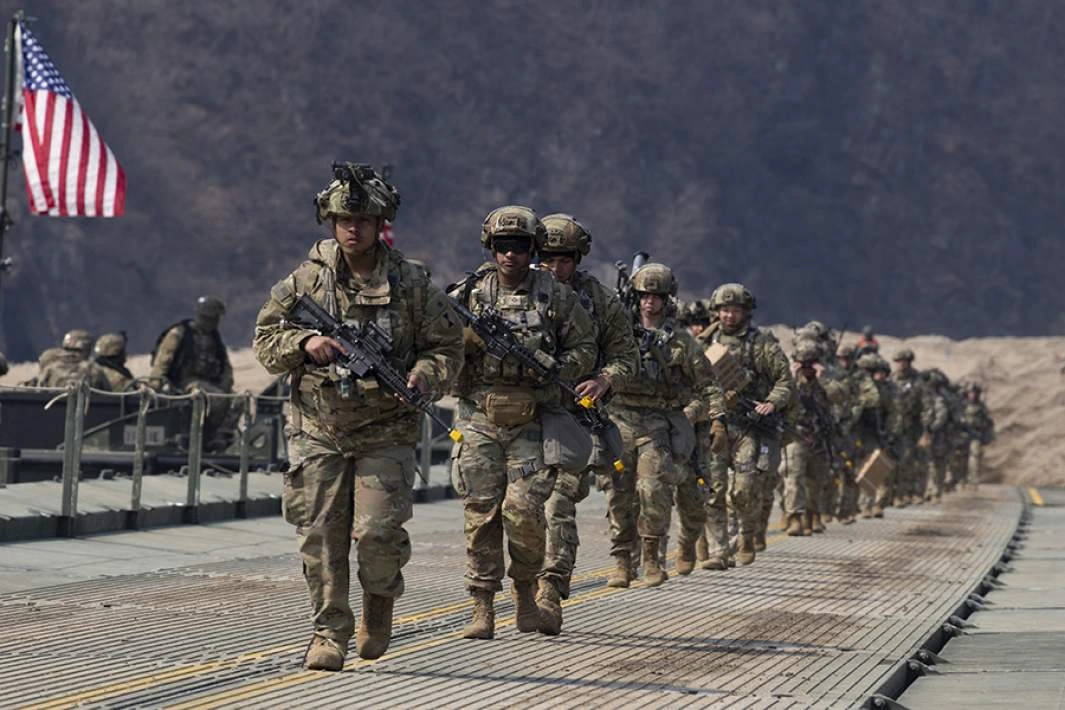
U.S. Army Europe and Africa, headquartered at Clay Kaserne in Wiesbaden, serves as the operational hub for American military activities across the continent. Analysts say reducing forces at this point sends an unmistakable message, not just to Germany, but to every NATO ally: Washington’s commitment to European defense is no longer unconditional.
“This is not just about numbers,” said a former senior NATO official. “It’s about signaling. And the signal here is that if you cross Washington on a foreign policy priority, there are consequences.”
The Germany-Washington Rift
Relations between Trump and Germany have been strained since the early weeks of his second term. The administration has pushed European allies aggressively to increase defense spending to four percent of GDP, a target that goes well beyond NATO’s existing two-percent benchmark and one that most European governments consider financially and politically untenable.
Germany had already been navigating a delicate balancing act: attempting to rebuild its armed forces after decades of underfunding while managing the political fallout from its dependence on Russian energy. Chancellor Merz’s government had been broadly cooperative on NATO commitments, but its sharp divergence with Washington on Iran created a fault line that the Trump team was not willing to bridge diplomatically.
The cancellation of a previously approved sale of long-range missile systems to Germany, a deal that had been in the pipeline for more than a year, further underlined the depth of the rupture. German defense officials were reportedly blindsided by the cancellation, which they described privately as a profound breach of trust.
European Allies Scramble
The announcement triggered urgent consultations among NATO members, with France, Poland, and the Baltic states all seeking clarification on what the withdrawal means for alliance commitments. Poland, which hosts a permanent U.S. presence and has been one of the alliance’s most vocal advocates for a strong American role in European security, expressed particular concern.
French President Emmanuel Macron used the moment to revive his long-standing call for “European strategic autonomy,” the idea that the EU must develop independent military capabilities that do not rely on American guarantees. While the concept has historically been viewed skeptically in Washington and in Eastern Europe, the troop withdrawal has given it new currency.
“Europe cannot continue to outsource its security,” Macron said at a press briefing in Paris. “What is happening today is a wake-up call that we cannot afford to ignore.”
The United Kingdom, navigating its post-Brexit position both inside and outside European security structures, was more measured in its public response but privately signaled concern through diplomatic channels about the precedent being set.
The Broader NATO Stress Test
The troop withdrawal comes at a moment of extraordinary pressure on the NATO alliance. Russia’s war in Ukraine, now entering its fourth year, has required sustained allied support, military, financial, and political, that has tested the limits of domestic political will in multiple member states. The emergence of a U.S. president willing to use troop deployments as leverage in bilateral policy disputes introduces a new and deeply destabilizing variable.
NATO Secretary General Mark Rutte issued a carefully worded statement calling for “continued unity and dialogue,” but stopped short of criticizing Washington directly, a reflection of the alliance’s limited options when its dominant member chooses to act unilaterally.
Defense experts warn that the optics of the withdrawal could embolden adversaries. “Moscow watches everything,” said one European security analyst. “When the U.S. starts pulling troops from Germany over a policy spat, that is information that gets analyzed very carefully in the Kremlin.”
Germany’s Defense Reckoning
For Germany itself, the withdrawal presents both a political crisis and a strategic inflection point. Berlin has been spending more on defense in recent years but remains behind schedule on the force modernization targets it committed to after 2022. The prospect of a diminished American presence has injected fresh urgency into debates about a potential European defense fund and a German-led continental security architecture.
Some voices within Germany’s political establishment, particularly on the right, have begun arguing openly for a more assertive national defense posture, including discussions that would have been considered politically toxic just a few years ago.
What is clear is that the era of Germany treating American protection as a permanent, unconditional given is over. Whether Berlin can respond quickly and substantively enough to fill the gap is the defining security question facing its government today.
